Showing posts with label Moving Abroad. Show all posts

Sunday, May 10, 2015

Balancing Life and Catching Up

It's been a while, okay maybe a few months is more than a while, but I've finally lost the guilty feeling of not keeping this blog up-to-date. Back in 2013 there were many times I forced myself to sit down in front of the screen and write something that just didn't inspire me. So for 2014 I had vowed that I would only write when I really felt moved to, and because it was something that interested me. If people read what I write that's great, if they don't I have this page for myself and my loved ones.

So I continue this vow for 2015. No inspiration, no post.

Teacher Appreciation Day, what's not inspiring about this?

Since moving back to Spain last summer I found myself wondering about my general outlook on life. I had gotten so comfortable living life here in Madrid that I almost forgot I was still living abroad. After the tragic death of Robin Williams, I vowed I had to seize the day more and push myself out of my comfort zone; whether it be small steps like buying running shoes, taking a Spanish exam, or hurtling down a mountain learning how to ski.

And yes, while it's a great to seize the day, there has to be some kind of balance to 'seizing the day' and being comfortable and secure. A balance I've never really felt like I've been able to grasp. Living with anxiety has always made me feel like I was living from one extreme to the next. I was always worrying about something, whether is was a legitimate concern or not.

Casual day relaxing with zombies at Parque de Atracciones.
The last half of 2014 brought about various steps to balance out my life, on all different levels. A balance of saving and spending, of work and fun, of comfort and excitement, of worrying and relaxing, and of social time and "me" time. I guess that's what it means to 'grow up,' knowing when, where, and how far to push yourself. And I feel that it truly paid off, because 2014 has been one of my happiest years.

In 2014 I spent my first Christmas season away from home. Instead I visited with my boyfriend's amazing family in Santander and was welcomed with open arms into their holiday celebrations; had my first cotillón, my first roscón de reyes, and my first Carnaval. I spent a wonderful month at home in the summer enjoying the beach and time with my friends and family and renewed for a second year in my school.

Beautiful Cantabria
Upon my return to Spain I pushed myself to learn and improve myself, both physically and mentally. I started to run in hopes of being able to run 5 km without my inhaler. I took the DELE (Diploma of Spanish as a Foreign Language) at the B2 level and I finished the year off by learning how to ski, even making my way onto some easy Red paths.

I took full advantage of living in Europe and traveled as much as possible. I saved every spare cent I could and explored more of Europe and Spain. With my father I returned to Paris, Rome and Toledo, but also traveled to new destinations like Ávila, Barcelona, Mérida, Santiago de Compestela, Ibiza, Salamanca, and Ireland. (And for all those who think it's not possible, I've also been actively saving and paying off my student loans. It's all about the private classes and budgeting).

Templo de Debod
As 2015 arrived, I thought about my initial goals for arriving to Spain and how they all circled around traveling and Spanish. Of course there's nothing wrong with wanting to see the world and improving my language skills, but few of them focused on my health and well-being. My blog is called "Life after College," and I feel like over the past few years I've lost sight of my original intentions: documenting my life after college in a relatable way. 

Yes, my own life has revolved around Spain the past couple of years, but I don't want to paint an idyllic picture of my life as sunshine and roses. Spain is wonderful and I love living here, but I still have doubts of my post-graduate life. How am I going to pay off my student loans? What am I doing with my life? What am I going to do in the future? Is this the right choice for me?

The winding road after college

So I've created new goals this year, goals that balance my love of travel with my health and well-being. Goals to help stay true to myself, and to this blog. Goals to help make the most of my life after college.

  • Stick to a consistent exercise routine
  • Eat healthier foods without sacrificing taste
  • Run 5 km without an inhaler
  • Learn how to relax
  • Save for my student loans
  • Blog when I can, and share the good and the bad
  • Improve my Spanish to take the C1 exam next spring
  • Travel to two new countries this year (Portugal down, one more to go)
  • Visit the rest of Spain's autonomous communities
    • Aragón
    • Gran Canarias
    • Comunidad Valenciana
    • Murcia

I am excited to work more on this blog this year, and to share some fantastic news. Big changes are coming my way this year, and I couldn't be happier!

Saturday, October 18, 2014

No Soy Yo: On Being Myself in Another Language

Ok.  We all know learning another language isn't easy, but expressing yourself...that's the hard part.

When you speak in your native language it feels natural.  You can crack a joke without thinking, have small talk with ease, and express yourself as an individual.  In another language it's just not the same: you fumble for words, your sarcasm doesn't come through, and cultural jokes are lost on you.

Being away from loved ones certainly doesn't help either
I can understand, have conversations, and produce Spanish.  But even with how much my Spanish has improved living abroad I still don't feel like myself.  I'm no poet, but in English the words have always come easily (excellent for all that SAT prep) but in Spanish I feel more like I'm the equivalent of a ten-year old child.  And not even a very funny one.

I know fitting in is always hard, especially being a naturally shy person, and moving abroad is no exception.  It's a frustrating circle of struggling to express myself, disliking my inability to express the real me in Spanish, and feeling further anxiety at the thought of struggling to express myself in the next social situation. Ugh.
Cracking jokes with my BFF back home
Speaking Spanish, especially the fear of speaking it incorrectly and inadequately (even though I know it's incredibly silly) has led me to just keep quiet.  I kept pulling the whole "try and make yourself invisible" that we all know never works.  I know the irrational fear of my Spanish causing me to be laughed out of a room has only been made worse by my anxiety, but knowing this didn't always make it easier.

So as this new year began I've finally realized that, after years of struggling to reconcile the real me with the "Spanish" me, the fear holding me back is pointless.  My Spanish won't get better if I'm too afraid to speak it.  And the more I hold back the progress of my Spanish the longer I stifle my personal expression.  Not to mention if I've never judged anyone for making mistakes in English why would I be judged for imperfect Spanish?  Answer: I can't let fear hold me back forever.  
Definitely speaks to me this year.
I know it was a brave thing picking up my entire life and moving to another continent, to start over in a new city, a new culture.  But as I remember the little girl who walked into my grandmother's Spanish classroom unashamed to babble in Spanish and share herself, I think that maybe it's time to be brave again.  To allow myself to make mistakes in Spanish, to share myself more freely, and to not be so afraid of just being me.

 Plus speaking Spanish can't be as scary as jumping out of a plane, can it?


How has your experience been expressing yourself in a different language?

Wednesday, August 13, 2014

Carpe Diem

Since my last post I've been busy, as in: finishing the school year, moving apartments, visiting home, and moving back to Madrid busy.  Even though I'm finally back in Madrid and settled into our new apartment I still had trouble feeling inspired, until this week.

This past Monday the world lost one of its greatest talents, and it got me thinking about where I am in my life all thanks to one of my favorite Robin Williams' movies: Dead Poets Society.

source
Don't worry, no spoilers here if you haven't seen the film (though you should), but Dead Poets Society has inspired me since the first time I watched it in my sophomore English class.  The major concept of the movie is an unconventional teacher, played by Williams, inspiring his students to think for themselves and make the most of their lives.

Being a high schooler myself when I first watched the film I could relate to the students who struggled with concepts of peer pressure, conformity, and self-doubt.  I laughed, I cried, and I vowed that I would take Williams' advice and make my life extraordinary.

Fast forward to Monday, and the start of this post and the question of what I'm doing with my life.  Yes I went to college, got a degree, made friends, fell in love, worked hard, traveled, and moved across the world but was I really "seizing the day?"  

source
Ok, moving to Spain I may have taken the road less traveled but what good is it if I'm not "living deliberately," if I'm not fully enjoying and appreciating this amazing opportunity that I have.

I have become so comfortable with my life, both back in the USA and now here in Spain.  During the school year I woke up, went to work, came home, cleaned and cooked, and went to bed.  Not really an extraordinary life is it?  Even now on vacation my life has fallen into the routine of cooking and cleaning, sounds like instead of "sucking the marrow out of  life" I'm "choking on the bone."

With the sudden, tragic loss of Robin I decided it was time to make good of my sophomore year vow.  Before it was too late I would make my life extraordinary.  So what did I do?  

I bought running shoes.

Sounds pretty normal right?  But for someone who loves to exercise but has never been able to run outside because of hip pain buying a pair of good running shoes (apparently I had high arches all this time) is the start of me seizing the day, and my life.  And today, on this beautiful sunny day, I went for a jog and for the first time I finished without any pain.

Templo de Debod, beautiful place for jog.
To me, living an extraordinary life doesn't mean crazy dare devil moves or spending lots of money, it means enjoying your time and making the most out of every moment.  Whether it's time with friends, having a nice run, picking up a new language, or trying a new recipe.  Push yourself, open yourself up to new things, and take every ounce from your life that you are capable.  Always remember that the most beautiful thing about life is:

"That the powerful play goes on and you may contribute a verse. What will your verse be?"

Monday, May 26, 2014

Renewing Your TIE in Madrid

It's that time of year already, back to paperwork!

After receiving my new Carta Nombramiento for this coming school year, and yes staying in my same school, I thought I would try take a few (baby) steps on the paper trail.  Per usual, extremely overwhelming.

As my anxiety started to set in on how I would possibly be able to get all of it done in the month before I go back to the USA for a visit, I had to take a step back and organize myself.  Leading me to this current post, as I assume I'm not the only one grasping at straws right now.  Prepare to be informed and simultaneously bored, after all Spain can't always be exciting.
Representation of my current emotions, but not as pretty...or fun
First off, make sure to use ANY resource available: If you're part of the main Madrid auxiliares FB group, look up in the documents section the document "RENEWING NIE in Madrid."  If not, just use this document from the Madrid auxiliares' website: Renovación de la tarjeta TIE, which was just updated today.


The documents that you will need are:

1. Impreso de solicitud en modelo oficial (“Solicitud de autorización de estancia y prórrogas-
EX – 00) make sure it's completed and signed, and that you have two copies. I used this link
2. Copy of ALL pages of your passport, plus bring your actual passport with you.
3. Old carta de nombramiento from the 2013-2014 school year
4. New carta de nombramiento from the 2014-2015 school year
5. Certificado de aprovechamiento from the 2013-2014 school year (Ask the director of your school!)
6. Photocopy of the student TIE that you want to renew (front and back of card)
7. Receipt of tasas de prórroga: Modelo 790 / Código 052 costing 16,81 euros Download, complete, and print here, make sure to mark the box for: 1.3 "Prórroga de la autorización de estancia por estudios, movilidad de alumnos, prácticas no laborales o servicios de voluntariado (titular principal y sus familiares)"
               *Make sure you select the right province: Madrid- código de provincia 28)
               *No need to photocopy, it will print out the three copies of the tasa to bring to the bank
source


Applying for the renewal:

You must go in person to the Oficina de Extranjería at C/ Garcia de Paredes, 65 (Metro: 
Gregorio Marañón – Line 10, 9am to 2pm, Telephone: 91 272 91 71 – 92 88) either within the 60 days before your card expires OR within the 90 days after your card expires.  According the auxiliares document (linked above) if you later need to present another document, or something has changed you can drop off the document at the registro público auxiliar de la calle Manuel Luna, 29.

According to the FB group, you follow the sign that says “Registro”unless you have questions and need to go to information.  Once you have turned in all of your paperwork you will be given back the stamped copy of your EX00 and Tasa 052 receipt (which you willl need these for your second appointment and to apply for an autorización de regreso if you plan on traveling outside of Spain while your NIE is expired). Make sure the address on your EX00 is correct because this is where information will be sent to you.

While I'm not sure of any specific time frame as I'm in the process myself, the documents from the ministry claims that within two months you should receive a letter in the mail telling you if your renewal was accepted or not.  If accepted, the letter should have a date of when you're supposed to go to Aluche and what documents you need to bring with you.  And after that approximately another month or so until the physical TIE should be ready.
source, Don't let this be you!
I'm in the initial stages of the renewal and have collected almost all of the paperwork, except the certificado de aprovechamiento from my school.  If you're still waiting for your carta, I highly suggest starting to gather all of the documents you'll need.  Most of them felt much easier to gather than from the initial TIE appointment!  Not to mention it will help you start to prepare if you are going home for part of the summer and need an autorización de regreso like I do.

[Update 7/18: Checked the status of my renewal to see that the result is: favorable, meaning that so far in the process my renewal has been accepted.  Pretty good considering it hasn't even been a full month since I turned in my papers.  Now just waiting to see when I get the official letter in the mail to get my fingerprints done!

Update 8/18: About three weeks into the process my favorable letter still never came, so figuring it was either A) lost in the mail or B) sent to my old apartment I decided to make the appointment myself without the letter.  To make an appointment for your huellas (fingerprints) in Madrid go to the extranjería website, select Madrid and EXPEDICIÓN DE TARJETA DE EXTRANJERO (HUELLAS), then follow through and put in your information.  

1. Once you have your cita, print the justificante form.
2. Print out your "favorable" status
3. 
Pick up the Tasa Modelo 790, Codigo 012 form at any national police station or foreigner's office (This cannot be downloaded, I went to the foreigner's office on Calle Silva near Callao) and make sure to mark box "4.2 Tarjeta que documenta la renovación o prórroga de la autorización de residencia temporal, la prórroga de la estancia o de trabajadores transfronterizos" pay €18,56 at a bank
4. Original + copy of your passport (including old visa and entry stamps)
5. Original + copy of your empadronamiento
6. Your old TIE + copy of your TIE (front and back)
7. A new photo (carnet size, I went to one of those booths in the metro stops and it cost 5€ for six)
I also brought the EX-00 document with the stamp/sticker from my original renewal appointment just in case. 

Update 9/18: Went to pick up my new TIE today!  No issues and I was out in five minutes with my shiny new card :)]

On the day of your appointment go early, like at least an hour early if you can (and bring water if it's in the summer!).  Get in the line labeled "huellas" and wait until it's your turn to enter, if it all goes well you'll get a resguardo at the end and be told to come back in 25-30 days with your old TIE and passport to pick up your shiny new card.  Good luck!
So hot the line was waiting in the tents.

Autorización de Regreso

After you turn in your renewal paperwork you can start to apply for your autorización de regreso (yes, at the dreaded Aluche), which gives you permission to re-enter Spain once your card is expired and you don't have a valid card.  The regreso is valid for three months and is only good for one use, which is why it's suggested to only present it IF asked for it.

To apply for the regreso you must have these documents:
source, How I feel when I have to go back to Aluche
1. Original and copy of your passport (some debate on the FB group if you need a copy of the whole thing, or just the information page)
2. Original and copy of your NIE (front and back of card)
3. Stamped EX00 form from your renewal appointment
4. Copy of your plane reservation
5. EX13"solicitud de autorización de regreso" I used this link
6. Receipt from Modelo 790 Codigo 012 (pick up a PHYSICAL tasa form from any police station or foreigner's office, I went to the one Calle de Silva, 19 near Callao) so show you paid the fee of €10,30

Be sure to ask for an appointment: here.  Choose “Madrid” and “Autorizaciones de Regreso” from the drop-down menus. Click “Entrar” at the bottom and be sure to fill in your personal info correctly. Select “Solicitar cita” to make an appointment and from there complete the rest of the information. Do not forget to print out the confirmation, you need it for your appointment!


Definately feeling the pressure to get these done with my flight home only a month away!  Just a reminder that while life in Spain can be great, it's not as glamorous as people think.  It's full of lesson planning, daily errands, and enough of paperwork to keep you on your toes.
Now go celebrate some football!

Have you started the renewal process, or applied for an autorizacón de regreso yet?  What tips do you have?

Tuesday, May 6, 2014

How Spain Has Changed my Taste Buds

Reading one of my favorite expat in Spain blogs (Kaley Y Mucho Más)a few months ago I read one of her posts where she had asked several expats about what foods they started to enjoy after moving to Spain.  The more I read, the more I realized how much Spain has changed my taste buds too.

I remember my first visit to my boyfriend's house nearly three years ago and how much I dreaded even trying some of the food (FISH) that was put in front of me.  I had grown up in Rhode Island, the Ocean State, but couldn't stand fish or seafood (I know, crazy).  I didn't like beans, olives, eggs, or even eggplant.

I didn't consider myself a picky eater, I just liked the foods I was used to eating...and didn't like the ones I wasn't used to. ¿Sabes?

With Spain being in my life for nearly three years now, and after living in Madrid since September, I can't help but look at that list of what "I didn't like" and laugh at how silly I used to sound.

Fresh Vegetables

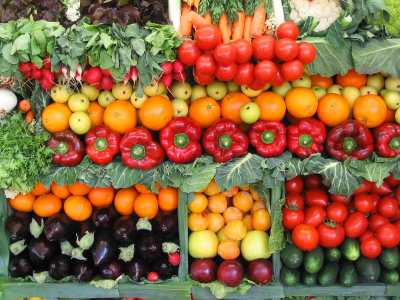
It's not that I didn't like fresh vegetables, but they're just so expensive in the USA that I was not that used to cooking, or eating them.  Though specifically, zucchini and eggplant, were not high up on my list of veggies I loved.  Iin fact, before this year I flat out refused to eat eggplant (unless the BF's mom handed it to me, there was never a choice).  Over time spent eating with my boyfriend's family I've come to love both zucchini and eggplant and they now have both become staples in my diet.
source

Seafood/Fish

This has been the most challenging food selection to overcome.  As a child the only time of seafood or fish I ate was greasy, fried fish and chips (which I only could stomach if it was drowning in ketchup, gross I know).  I have slowly grown to love seafood like: squid, razorclams, clams, and octopus but to be honest I've not come so far with fish.  I can actually enjoy some fish now (certainly helps if it's from a nice restaurant), but most I really just tolerate (aka cod) because it's good for me.  Still not sure if it's more of a taste or textural thing...
Pulp Gallego (Galician Octopus) source

Eggs

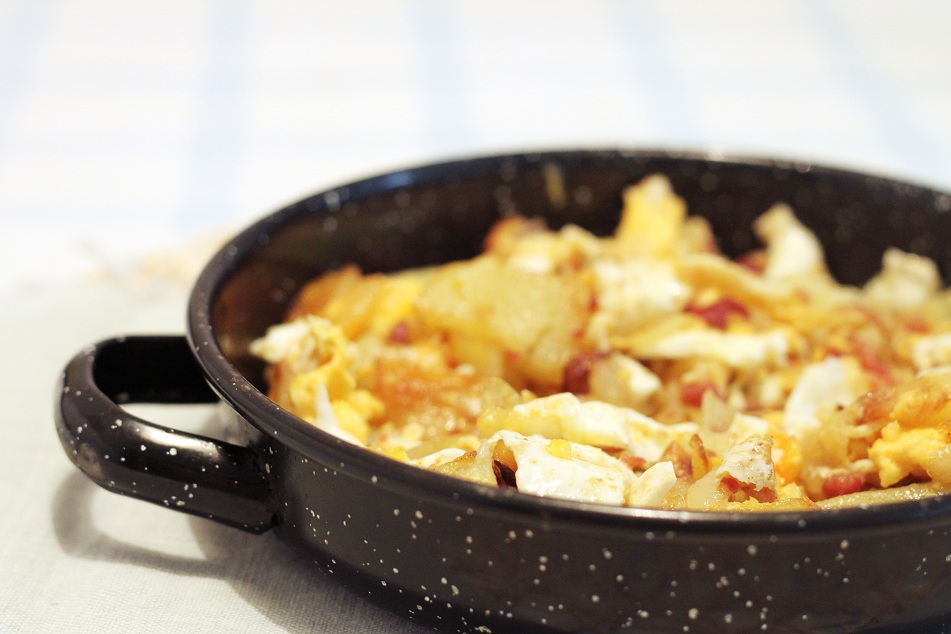
Eggs.  It's all about how they're cooked.  Before Spain came into my life the only way I ate my egg was scrambled with ketchup or jam, and only for breakfast.  This would not last in Spain as egg is rarely served for breakfast and is a common part of the Spanish diet, from tortilla española (Spanish omelette) to huevos rotos (broken eggs).  From day one eggs were forced on me and I have to say, I don't hate eggs anymore and will readily enjoy tortilla or huevos rotos. But. Still not a fan of hard-boiled eggs...
Huevos Rotos (Broken Eggs) source

Red Wine

Before Spain I was OK with red wine, it wasn't my first drink choice but also wasn't my last.  With a lack of decent beer choices in Spain though (slowly being remedied in large cities, like Madrid!), I gradually turned to wine.  Over the years with Spain in my life I've come to appreciate a good Crianza and enjoy a nice glass of wine at the end of the day.  The choice is made even easier knowing that in Spain you can buy a decent bottle of red wine for a mere 4€.
source

Morcilla

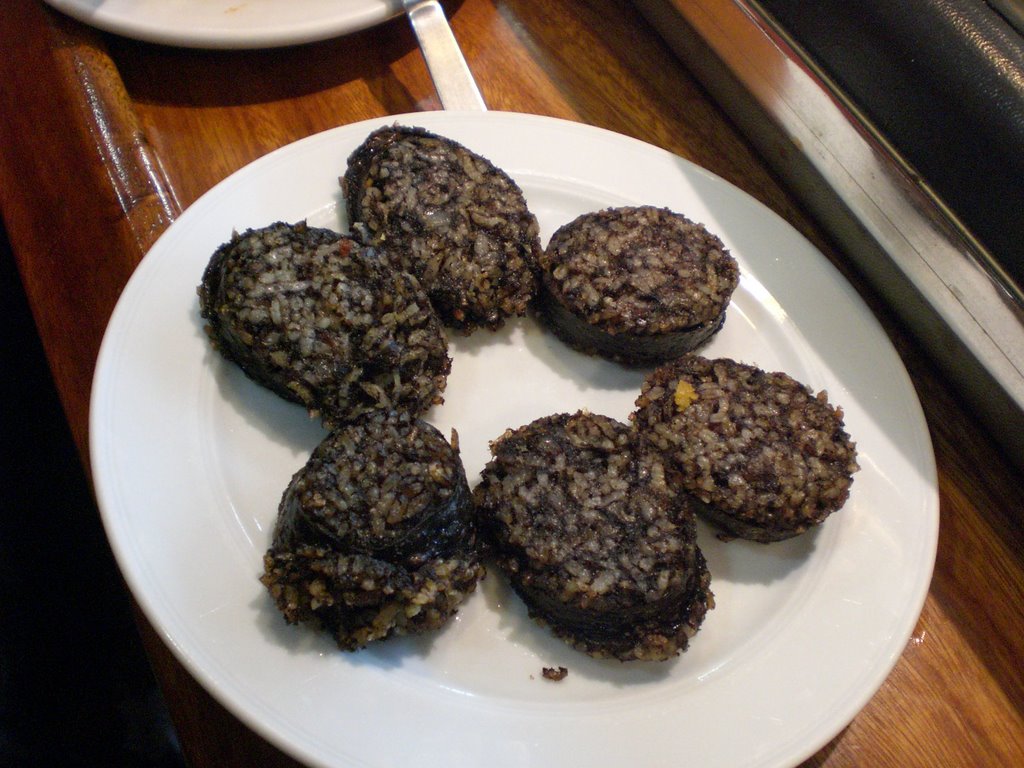
Spanish food is known for using all parts of the animals, whether it's pig snout or ears, and while I've not quite grown to love all these "new" foods, there are some (like morcilla) that I probably enjoy too much.  Morcilla, a Spanish blood sausage, that is either prepared with rice or nuts (depending on the region).  When the BF first told me about this dish I didn't even want to try it, he even went so far as to order it anyway and not tell me what it was!  Lucky for me though because I fell in love from the first bite.  The type that I prefer is Morcilla de Burgos, it's from the province of Burgos and is usually prepared with rice.
source


There's still a lot of various foods I'm still working on, sorry all you beans, but that's the best part about living in another culture.  There's an endless about of new food possibilities to try...but I still don't like olives!  Sorry Spain!

What's one of your new favorite dishes?

Monday, February 24, 2014

Nochevieja, Celebrating Like a Spaniard

A little late in the year for talks of New Year celebrations, but never too late to learn some new traditions!

New Year's Eve throughout the world is quite the spectacle, but never have I seen a spectacle as large as in Spain.  This year was my first New Year's Eve away from home, and I got to spend it with my boyfriend's family and friends in Santander learning how to ring in the new year like a Spaniard.
source
I was first most surprised by how family oriented this holiday was compared to the United States.  Unlike in the USA where I either celebrate at my house with my mom and a few friends or at a friend's party, my boyfriend's whole family got together for a huge family dinner (very similar to their Christmas Eve here).

We arrived at their grandfather's house for around 9:00 pm, perfect timing for a Spanish dinner, and spent the time playing games and planning on how my hair would be done for later that night.  Yes, you heard that, how my hair was going to be done...but more on that later.
Bringing two cultures together with pie!
As the clock struck 10:00 we all gathered around the table for a huge dinner of langostinos, pâté, anchovies, cured lomo, salad,  piles of bread, cochinillo (suckling pig/piglet), and cordero (lamb).  Finished off with dessert of torrijas (like a very sweet french toast) and apple pie I made to share some of traditional USA culture.  As usual everything was delicious and I rolled away from the table with a stomach too full for my own good, my typical state after big Spanish family dinners.

Now with an hour to spare before the twelve chimes from Puerta del Sol, the hour of the peinados (hairstyles) began.  In Spain once midnight strikes it's very common for teenagers/young adults, who are of drinking age or atleast pretend to be, meet with their friends to go out.  One of the ways to do this on New Year's Eve is to have a cotillón, a party where a group of people rent out a bar for one pre-paid entrance fee (normally anywhere from 35-70€) and stay and drink there until the bar closes around 6:00 am.  In Santander everyone is dressed to the nines for these cotillones, the men in suits and the women in nice dresses, some even with their hair styled.
My fabulous hair-do
As it was my first, and maybe last cotillón as many of our friends aren't feeling cotillones anymore, we wanted to go all out.  The BF's aunt used to be a hairdresser and she fabulously styled my hair and his sister's.  While we were being "beautified" he was on grape duty.  Counting out grapes for all the family members and making sure everyone had the twelve grapes in time for the twelve chimes, probably the most well known Spanish New Year's tradition.

Unlike watching a giant crystal ball drop in Time's Square, well they have a small ball drop, everyone gathers around the TV, with grapes in hand, to watch the center of Madrid and wait for the clock to strike.  Once the clock strikes numbers appear on the screen with each chime, telling when each grape should be eaten.  I'm proud to say I ate all twelve grapes in time, good luck and prosperity for the new year!, though it did help that we had seedless grapes...  Regardless, we toasted the new year with cava, gave besos to the whole family, and enjoyed all the fireworks being set off near the house.


Now that it was after midnight we were in a time crunch to finish getting ready to meet our friends in the center for 1:00 am.  We were dropped off by their father who agreed to pick us all up the next morning in the center around 7:00 am, a reasonable party end in Spain.

Altogether the cotillón was fun, not the greatest music unfortunately, but after being in Madrid it was great going out with all our friends from Santander.  And like any great Spanish party, we ended the night (began the day?) with chocolate con churros.

When we woke up later that day we went back to their grandfather's house for a New Year's Day family lunch of delicious home-made Paella.  A few games later, more like the same game of Risk for a few hours, we all went to the cinema to catch a movie (Keanu Reeves's 47 Ronin) together.  The perfect way to relax after a long night, and to remember how much I love the Spanish importance of family.  There's nothing better than family time!
source

How was your New Year's Eve?  Have you ever celebrated it as part of another culture?

Sunday, January 26, 2014

Living On a Budget: Auxiliar Style

A lovely day in Madrid to talk budgets.
I've had a lot of people back home, as well as people interested in teaching abroad in Spain, wonder how I'm able to live abroad and make ends meet.  Many who are not in the program have wondered if I get paid on time, how much I spend per month, and if the money I make is sufficient to live abroad in Spain.

In the Auxiliares government program you get paid  based on the location you work.  In Madrid you work 16 hours per week and make 1000€, while in the rest of Spain you work only 12 hours per week and make 700€.    As the capital, and largest city in Spain, Madrid is one of the most expensive cities to live here and with the Auxiliares you make more money to cover the extra living costs.

Though many may not believe it, in this program you can make more than enough money to live comfortably in Spain.  Especially if you find any of the abundant Private English classes.

To help give you an idea of how I live on my budget abroad, here's a breakdown of my monthly expenses:

Transportation:

My school isn't in the center of Madrid where I live, instead it's a city just outside of the city limits so I have to buy a monthly Abono/Transportation pass.  You can buy these Madrid monthly abonos in based on what zone you need to travel between (A, B1, B2, B3, C1, C2, E1, E2) and your age: Joven, Normal, and Tercera Edad. Because my school is in the B1 zone I buy the monthly B1 Abono, and unfortunately (for me) because I'm over 23 I have to buy the Normal B1 abono.  The card costs me 63.70€ a month but covers any (trains, metro, or bus) travel in zones A and B1.
source

Housing:

As I said before, I live in the center of Madrid.  And when I say center, I mean center, as in three minutes from Puerta del Sol.  My boyfriend and I share a one bedroom apartment together, and obviously the rent and utilities that come with it.  Since it's only a one bedroom apartment it's very cheap for us: 280€ (for each of us) per month for just the rent.As for utilities, we don't pay for our water only for electricity and internet.
source

For internet and phone we each pay 17€, but this also includes a few hours of international calling to the USA per month.  [Hear that stateside friends!].  And for electricity it depends on the month and the amount we use.  In September and October it was around 11€ for each of us per month, in November and December it was closer to 25€ for each of us per month, and now that the cost of electricity has risen starting this month...we shall see...

Point being that my cost for housing in Madrid's center has ranged monthly from 308-322€.  Definitely not too shabby for living in the Country's capital.


Groceries:

Groceries in this household depends a lot on how much my boyfriend feels like eating in a sitting, which is usually a lot more than I do!  We still split all food costs 50/50 and usually the monthly cost is 300€ for the two of us, so around 150€ each one.  If you're wondering what grocery stores that we shop at, we generally go to the Hipercor of Cortes Ingles (which I've found far less expensive than everyone claims it to be) though sometimes I also go to the Ahorra Mas across the street from my school, or the Carrefour Express that's also near our apartment.
How can you not love the fresh food in Spain? source

Phone:

In Spain this doesn't have to be you! source
Paying for my cell phone here is so cheap that it's something I rarely think (and never worry) about it.  The thing about cell phone service in Spain compared to the USA is that purchasing the actual phone is generally much more expensive (even with a contract and you don't get free upgrades!) but the plans are usually way cheaper.

The cheapest unlocked smartphone I could find was 79€ but my monthly plan with Tuenti is only 10.89€ (now changing to 10.75€!).  I chose Tuenti because of this plan of 1GB of data and 75 minutes of calls per month, so far I haven't gone over either since being here since September.  The only thing is that when I pay monthly on my account they only accept payments in increments of 5€ so sometimes I only have to pay 10€ while others I pay 15€, so I always budget a full 15€.


Savings:

Like many other auxiliares in this program I'm a recent College graduate with student loans to pay off.  I didn't want to defer them but also didn't want to have to pay them while I was here, so I saved up enough money to pay for my loans for two years (seriously spent all last year saving) to prepare for if I was renewing.  In case I do want to stay in Spain for a third year, I have been saving 80€ a month that is for my loans to be transfered to my American bank account at some point this year.
Save those euros! source

General Spending:

This category is for all the general spending in a month, whether it be for: drinks, clothes shopping, having dinner out, or general miscellaneous purchases.  On average per month I spend around 200€ for all of the above, rarely going over my budget.  While Madrid may be more expensive than other cities in Spain, I've found that it's much cheaper to go out here than where I live (beers and wine for 1€, yes please).

You just have to know the different options and know the ofertas, for example: if you like shopping, know when the rebajas (sales) are during the year.  In the current post-Christmas rebajas for only 115€ I've bought a winter coat, a dress, two pairs of jeans, two blouses, and 1 t-shirt.  Score!


For those who want a clearer break-down, these are my monthly costs and the amount I have leftover:
My Average Monthly Income: (1000€ + private lessons)
63.70€ Abono
308-322€ Rent/Utilities
150€ Groceries
15€ Cell Phone
80€ Saving
200€ General Spending
816.70-830.70€ Total Expenses

Every month I clearly have plenty of euros leftover.  This money  is what I've been saving to use for future European travels, like when my Dad is coming to visit me (and Europe for the first time) in April!

If you want advice on any of the above processes like housing, abonos, and phones; read my post:

And for those who what more ideas on budgets in Spain check out these helpful posts:

How does your budget abroad differ from mine?  Do you have any questions about living costs in Spain with the Auxiliares program?

Monday, January 13, 2014

Nochebuena, Papa Noel, and a Snowless Christmas

I knew one day I wouldn't be able to come home for holidays; after all we all grow up, we all move away from home, and we all start our own lives.  I just never imagined the day would come so soon and that we would be separated by a whole ocean.

When I accepted the position to teach abroad in Madrid I made the conscious decision that I would not be home for Christmas.  Flight prices are so expensive this time of year, I didn't know if I would have my resident card in time, and it just seemed easier to stay in Spain to celebrate.
Christmas morning!
In retrospect, more convenient: yes, easier: no, rewarding and worth the experience: definitely.

While it was at times really hard being away from my family (a.k.a. on Christmas Eve I might have cried the whole bus ride home from the downtown area...), I was extremely lucky to be invited to spend the holidays with my boyfriend's family in Santander and had a home away from home.  Plus the added bonus that I got to see what Christmas was like as part of a Spanish family.

One of the things that pleasantly surprised me the most was the extent of the public Christmas decorations.  In both Madrid and Santander there were Christmas lights on all over the main streets and plazas; I was amazed when December hit and the streets were lit up every night.  While Madrid, as the capital, certainly had more lights I still found those in Santander impressive.
Town Hall of Santander

The plaza of the Ayuntamiento of Santander was lit up with tree lights, the reyes magos (wise men), and reindeer; not to mention the carousel and Mercado de Navidad in the Plaza de Pombo.  I guess I found all the holiday decorations strange becauses of all the controversy at home about decorating for Christmas and excluding other holidays.  It's become such a taboo subject in some public places like schools that I was not used to so much "Christmas", but being away from home I loved all the extra holiday spirit!

One tradition that was definitely new for me was Tardbuena. When December 24th roles around all the young (drinking age) people, at least in Santander, celebrate Tardebuena.  Before having dinner and spending the evening with their families, they spend the afternoon drinking at different bars with their friends.  And when I say the afternoon I literally mean from noon to seven bar hopping decked out with noisemakers and santa claus hats.

When I asked my friends about this tradition they said it's something that is a relatively recent addition to their holiday celebrations, maybe five or so years old.  While it may just seem like typical Spain going out and partying, it's more than just getting drunk before your family dinner.  It's about including your friends in your holiday celebration and celebrating being a "family" with them.

I found on my first Tardebuena that it was the perfect way to fit in 'friend-time' during the busy family holiday season.  Unfortunately for us though, and in true Santander fashion, Tardebuena ended in a rain-out as we tried to run to the bus stop without being soaked.  I failed and made the bus looking like a wet dog...

My second Spanish family
After everyone goes home, or is picked up, the real Nochebuena (Christmas Eve) celebrations began.  Finally, with dry hair, I got dressed for the night and we all went to my BF's grandfather's house in a village just outside of Santander.  Unlike most holiday celebrations at home there were not appetizers served while everyone was waiting around for dinner to be cooked, you just have to be patient and wait for food (very un-Spanish!)  This wait is even more noticeable by the fact that dinner was not served until 10:00 pm, an ungodly dinner hour for most Americans.  But absolutely worth all the delicious Spanish foods!

[If you want to learn about some of the traditional Spanish Christmas treats read this post by blogger Cat from Sunshine and Siestas: A Field Guide to Spanish Christmas Treats, I particularly like marzipan and turrón the most.]
A little piece of home!
When we did finally commence eating, our first plates were: langostinos (prawns/large shrimp), pâté, anchovies, cured lomo, salad, and of course piles of bread.  I'm not a huge fan of pâté or anchovies, but I love langostinos and I had a super Spanish lesson on how to peel them with a knife and fork.  I'm proud to say that I was mostly successful!  After the first plates came the meats: cochinillo (suckling pig/piglet) and cordero (lamb).  And finally dinner was followed by New York style Blueberry Cheesecake from the BF's cousin, assorted Christmas cookies I made with the family, and drinking and games until four in the morning...  I kid you not.  Let's just say this grandma started to fall asleep after midnight.

Christmas morning after waking up, not so bright and early, we gathered around the Christmas tree to open our presents from Papa Noel.  Papa Noel is very similar our 'American' Santa Claus and is a relatively new part of the Spanish holiday traditions.  In fact, many of my students and friends still receive most (if not all) of their presents from the Three Wise Men on the Epiphany on January 6th.  Nowadays in the BF's house they give most of the presents on Christmas and only a few on the Epiphany.
Christmas boxer sharing the spoils
Our piles of presents were all sorted and marked by our respective slippers, and like at home, we each took turns opening the gifts.  The BF's family was super sweet and even had some presents for me!  It was really thoughtful because I thought I was only going to have the gifts that I had gotten when my mom put Christmas money in my account for presents.

After the present extravaganza was finished we got ready to head back to their grandfather's house for Christmas day lunch.  We all filled up on more langostino, baked pasta, more meat, and leftover desserts from the night before.  Part of the family's holiday tradition was that after every Christmas day lunch the cousins all go out to the cinema to catch a movie, so while we digested we caught a showing of the second part of The Hobbit.

But even though "Christmas" was technically over, the celebrations were not.

Every year the BF and his friends have a Christmas dinner where they get dressed up, go to a nice restaurant for a special menu, and participate in Secret Santa.  Since this was my first Christmas here it was also my first year to be a part of the festivities.  Luckily I was given a good friend and I surprised her with a hand-knitted hat and jewelry.

This year we had the dinner on the 28th, the holiday of 'Día de los Inocentes,' the Spanish equivalent of April Fool's Day.  Let's just say the waiters' had a lot of fun making jokes when they were serving us...  The food was good, the wine was flowing, and it really meant a lot to feel like a part of the group.  As the 'foreigner' in a group it can be easy to feel left out even if no one means it: someone tells an inside cultural joke that you don't get because you didn't group up there, a song from the 80's comes on and the whole bar starts rocking out without you, etc.  

But my point is, that it's days like that Christmas dinner when you see the effort someone took trying to buy you the perfect present (an assortment of baking supplies, cupcakes for everyone!), that you realize just how much you're loved.  And that's when I realized everything.  

I was home for Christmas.  It just took a while to realize you can have more than one.

How was your Christmas?  Do you have any special holiday traditions?

Monday, December 30, 2013

And What Exactly DO You Do? A Day in My Life Abroad

A lot of people from home, and others looking into working abroad in Spain, have asked me what I do on an average work day.  Usually I met with a mix of shock and amazement.  They tend to think my life abroad is super glamorous: always going out, constantly traveling, stocking up on a fashionable European wardrobe; that's really not the case (I wish, right?!).

And I mean yes, I do go out sometimes and yes, we have such an amazing opportunity to travel here, but I am still working.  I still have responsibilities, bills to pay, and errands to do during the week.  The reality is that my daily life in Madrid is relatively normal; I wake up, go to work, cook lunch, do errands, plan lessons, and go to sleep.  In many ways it's much like my life last year and of my friends who are working back at home.
source
For those of you wondering if you want to make the move to Spain too, here is a breakdown of my day-to-day life here in Madrid:
Tuesday-Friday
7:25 am (I know, I'm weird) I wake up and start to get ready for a day of work.  I would say 'Bright and early' but the sun is really not out until I start walking to the train.  With my program I only work 16 hours a week and have all Mondays off, it's pretty awesome.

8:10 am I leave the apartment to catch the cercanías/train in Sol.  Luckily our apartment is really close so it's a quick walk.

8:19 am I catch the train south to Getafe, it's about 18/20 minutes on the train and then another 10 minutes walking to the school.  I don't actually mind the commute, one of my favorite parts about Spain is all the walking and public transportation.

8:50/8:55 am I arrive at the elementary school and make sure I brought everything I needed (so far so good!) and that I have everything prepared for my classes.

9:00 am The school day begins and I go to my first class, either First or Fourth grade English or Science.  All my classes are different depending on the day of the week, but they're all always with the First and Fourth graders.

10:00 am Second class of the day.  Usually it's First or Fourth grade English or Science but on Thursday I have Physical Education (PE) class with my Fourth graders.

11:00 am Third class of the day, again First or Fourth grade.

11:45 am Break/recess, students go out to play on the playground and the teachers get a delicious breakfast in the lunch room.

12:15 pm Fourth class.  On Wednesdays I have a break during this period and I use it as more planning time.

1:15 pm Last class (yayy)

2:00 pm End of the school day!

On the days I don't have private classes I take the train back to Madrid capital to have lunch with the BF, run errands, and prepare for the next day.  However, on Tuesdays and Thursdays I have my private lessons so I don't come home until much later.

Tuesdays
On Tuesdays I have two private English classes I teach.  One at 4:00 pm and another at 6:00 pm
2:00 pm Planning time at the school, I use this hour to finish any preparation for my private lessons or classes.

3:00 pm Lunch in the school lunch room with the other teachers and administrators.

4:00 pm My first class that is just perfectly right near my school. When this first class ends I have a coffee with the family then leave straight to my second class, which is about 40 minutes away.

6:00 pm.  Second class of the day with two siblings.  It's fun class that's all about different games.

8:00 pm This is around when I arrive home.  It takes roughly 40 minutes to get back home when the class ends so I usually get home very late and very exhausted.
How I feel at the end of every Tuesday..., source
Thursdays 
Thankfully it's a day with a much easier workload, especially now that I might be dropping my second class (really not worth the stress it puts me through, just not a good fit).
2:00 pm Planning time while I eat a lunch I packed from home since there's not enough time to grab a delicious lunch from the school.

3:30 pm This is actually the same 4:00 pm class from Tuesdays, just thirty minutes earlier.

5:30 pm Arrive home from my class and prepare for the next day of work.  Usually feeling great on Thursdays because Fridays are so easy in comparison!

As for what I actually do in my in-school classes depends on the class and teacher I'm working with.  In my classes I'm used differently by all of the teachers I work with, some I prefer more while others tend to leave me guessing.  It's definitely been interesting getting used to all the different styles and trying to figure out what is expected of me in the different classes.

I have one teacher who asks me to teach the class's lesson in advance and I will look through the book and plan how I will present the material to the students.  With another auxiliar in the same grade we also plan activities for the students on American culture for special occasions and holidays (for example this super cool "How the Grinch Stole Christmas" game), as well as do special tasks they want us to do like creating the above book cover for the class book on growing up.  Sometimes they put a lot on our plate but the teachers are really understanding and grateful for everything we do.
It is, right? source
I have another teacher that doesn't usually ask me in advance, but will ask me in class to teach the lesson.  At first it completely caught me off guard and I would sweat my way through the lessons until I figured out exactly how she wanted me to teach the material.  Luckily I started to have a hang of it before she left for a few weeks and I had to solo teach her class.  Usually she doesn't have me plan anything special for holidays because she's so on top of it, she plans the most amazing things for the students.  While the last minute planning was a bit unnerving at first, I now know exactly what is expected of me with this teacher too.

It's my final teacher that I still sometimes don't know what is expected of me.  Sometimes she tells me what she would like of me, other times I have to figure out, some days I'm asked to plan something, other days I'm expected to plan something without knowing.  I finally brought it up to her and she explained what she wanted and I'm thinking over the Christmas vacation how I can realize those expectations in the classroom.

This whole experience has been full of so much learning for me as a teacher.  It's definitely made it easier that I came into the program with prior teaching experience, but the education system and styles in Spain are so different that I've had a lot of catching up to do.  It's important to remember that each teacher has a different method to the madness and it really helps to talk to them and get on the same page.  Being so shy I have had trouble going up to the "much-more-forward-Spaniards" but it has really helped discussing what we both want to accomplish in the classroom.
This is what it's all about after all

How does my life compare to yours?  Do you have questions about teaching English in Spain?