Showing posts with label History. Show all posts

Wednesday, August 20, 2014

Barcelona and Gaudí Galore

The famous La Sagrada Família
Back in March my boyfriend and I planned an impromptu trip to Barcelona, and by impromptu I mean it.  It was a trip planned in three days and I thought I was going to have a panic attack because we didn't even know where we were staying until we arrived to Barcelona.

Despite the near panic attack, I was still very excited to arrive because I had always wanted to travel to Barcelona.  The plans were finally pushed into fruition this particular weekend as a reunion for my boyfriend and his friends.  I have to point out that the biggest thing I had noticed about discussions of Barcelona is that it seems to elicit strong feelings, everyone either seems to love it or hate it.

To be honest I managed to fall somewhere in between those opinions.  And before anyone gets offended, it wasn't really Barcelona's fault.  The weather was terrible, a mix of rain and cold, and we were so rushed to see the city in only a day and a half. What instead moved me about the city was how kindly I was treated by the BF's friends there.
I was obsessed with the stained glass windows


We arrived to Barcelona late at night, picked up by one of the BF's friends to be dropped off at another friend's house where we'd be spending the weekend.  When we finally arrived at our home away from home for the weekend we were greeted by home-cooked food the family had saved for us from their dinner, I love Spain.

After we shoved food in our face a quick dinner we met the rest of the friends in the center for a night out.  A night out that proved why botelloning gives anxiety, though no worries my #guiristatus and the fact that I wasn't drinking saved me from the whopping 12€ fine.  Kind police officers aside, I still prefer just paying at a bar or club and not worry about my anxiety when I want to salir.

Thankfully the rest of the night was not nearly as exciting and we woke up bright and early, still not sure how we we did it, to tour the actually city of Barcelona.  Which if you couldn't guess is a lot to do in one day, but is possible if you if you A) Don't mind paying for public transportation or B) Don't mind walking until your feet make you want to cry.

We chose B and started out near the center at the Arco del Triunfo and made our way to the world famous Sagrada Família, which is really a church and not a cathedral like many people think.  For those unfamiliar with this beautiful church, it's famous because it was designed by Catalan architect Anton Gaudí and also because as work depends on donations and ticket sales the construction has taken well over 100 years and the church is still not complete (though it's anticipated to be finished in 12 years).

[General Tickets: 14.80€, Student Tickets: 12.80€; to visit the towers too General Ticket: 19.30€, Student Ticket: 17.30€; the Basilica is open 9-8 PM]


After Sagrada Família we then walked to Park Güell, another famous site designed by Gaudí.  For new visitors the rules of visiting the park have recently changed.  The park used to be entirely free but now visitors have to pay to enter the famous Gaudí area of the park, though the rest of the park still remains free and open to the public.

The biggest shock to me when we purchased the tickets is that you're given an entry time.  If you miss your entry time, well then you're out of luck.  Since we had about 45 minutes to wait for our entry time we decided to walk around the free area of the park, starting at crosses that mark the highest point of the park.  By climbing to the top you get a spectacular view of Barcelona, and a nice little hike.  Though be cautious if it's a windy day, seriously had a few moments clinging to the rocks and fearing for my life...


Finally it was almost our entry time to the monument portion of the park so we marched back downhill and had our tickets collected by the security guards at each entry point.  And to be honest, I was not as impressed as I was with La Sagrada Família.  At 8€ to enter, a specific time available to enter, and such a small portion of the park actually designed by Gaudí it was beautiful, but not my favorite spot on our whirlwind tour of Barcelona.

[Online Tickets: 7€, Office Tickets: 8€; the park is open 8:30-6:00 PM October 27 to March 23, 8:00-8:00 PM March 24 to April 30, 8:00-9:00 PM May 1 to October 26]

Too tired to walk back to the center, we took the metro to head to Casa Batlló, a house that was redesigned by, you guessed it, Gaudí.  The roof is said to represent a dragon and the spire on top the lance of Saint George, Saint George (Sant Jordi) being the patron saint of Cataluña.

It truly is a beautiful building, especially with the gorgeous mosaic Gaudí is known for, but at 18.5€ for a student ticket it was just more than we wanted to spend so we just stopped by to see the façade.

[Adult Tickets: 21.50€, Student Tickets: 18.50€, the building is open 9:00-9:00 PM]

After the quick walk-by of Casa Batlló we made our way to La Rambla, the famous Barcelona street that connects Plaça de Catalunya and the monument for Christopher Columbus.
While La Rambla is known for its shopping, it is also infamous for tourists, tourist traps, and pickpockets.  We spent most of our time trying to find a place to wait and stay warm until we met our friends for dinner.  Too cold to walk much further and we hid in Starbucks and naturally I ordered a cold drink, sometimes my intelligence knows no bounds.

After the previous night's dinner at possibly the worst Chinese restaurant I've ever eaten in, at least it had Karaoke, we spent our last morning in Barcelona with a quick tour of the area known as the "Gothic Quarter." This area of Barcelona is famous for the number of buildings that are from the Medieval Period. 

We started the tour at the Cathedral of Barcelona. While the structure of the cathedral is from the Medieval period, few people seem to know that the façade is actually neo-Gothic and was added in the late 19th century.

As we walked through the streets we entered a plaza called Plaça de Sant Felip Neri that is famous for the damage it sustained during the bombing of the Spanish Civil War. During the bombing people were hiding in the basement of the church and 42 people, including children, were killed. Here's a great video about the plaza from Barcelona Blonde (previously Hola Yessica) from her MyBarcelona video series.

It was a shame we saw this area so quickly, and on our last day, because it ended up being one of my favorite parts of Barcelona.  While it didn't entirely win me over on my first visit, I would love to head back to Barcelona one day and explore more of this area.  With bad weather and such little time, it wasn't quite enough to get charmed by the Barcelona that everybody seems to love.  Though this time I'll be checking the weather reports!

Have you ever been to Barcelona?  What are your thoughts?

Thursday, August 22, 2013

Goals For my Time in Madrid

In less than two weeks I will be moving to Spain to teach English at a bilingual elementary school in Madrid with the government program: Auxiliares de Conversación.  Over the past months I've been thinking of the many things I would like to experience and accomplish in my year abroad.  Here is a working list of some the main goals I hope to meet there:

source

*Travel to at least three new countries.

*Learn how to cook Spanish foods for myself. So far I've managed pisto, salmorejo, crema de calabacín, natillas and more!

*Improve my Spanish enough to have a full conversation with my boyfriend's family.

*Read a full chapter book in Spanish for the first time since high school. (Apr. 2014)

*Find a way to exercise and stay in shape in Madrid, without hurting my hip again. (Sep. 2013-Buying a step at decathalon, best purchase ever)

*Go a whole day without speaking English.

*Try something I normally wouldn't. (Do barnacles count?)

*Be more independent.

*Bonus Goal: Visit all the Autonomous Communities in Spain, here are the ten I have yet to visit:
  1. Andalucía (Nov. 13)
  2. Aragón
  3. Islas Baleares (Oct. 14)
  4. Gran Canarias
  5. Cataluña (Mar. 14)
  6. Comunidad Valenciana
  7. Extremadura (May 2014)
  8. Galicia (Aug. 2014)
  9. La Rioja (Feb. 2015)
  10. Murcia

What goals do you have for this coming year?

Tuesday, August 6, 2013

Travel Plans Abroad

Since I have less than a month left before the official move to Spain (yikess!) I've been obsessing considering which places I would like to travel to in this coming year abroad.  I have a list already a mile long but have been narrowing it down based on average flight costs and travel expenses, plus taking into consideration my top travel dream destinations.

There are just so many places I want to see that it's hard to be realistic about how much time and money I can afford to spend on everything!  Right  now I've narrowed my travel plans to six countries that I really would like to travel to/around.  At least with the Auxiliares program I know there's a potential second year, so for the places I miss I keep telling myself, "next year, next year."

Spain

Sevilla
Even though I've been to Spain three times I haven't seen all that my future home has to offer.  Most of my travels have centered around the northern coast of Spain or right in the center near Madrid.  There are still plenty of places I want to visit while I'm living in Madrid especially along the Mediterranean coast and the south of Spain.

Luckily I'll be right in the center of everything in Madrid, making it very easy to travel around Spain (as well as the rest of Europe).  A few of the Spanish cities I would like to try to explore this year are: Burgos, Granada, Sevilla, Salamanca, and Santiago de Compostela (not to mention my future home of Madrid!).
Burgos
Granada


British Isles

London, source
I say the British Isles because I can't decide where I want to go!  My family comes from Scotland, England, Ireland, and Wales so it's always been a dream of mine to visit (especially since my great-grandfather came over as a boy and we potentially may have relatives still there!).  My aunt has been researching our family history and ideally one day I would rent a car and drive all around the Isles visiting the towns where my family is from.

As that's probably not feasible for this year, I've narrowed it down to the three cities of Dublin, London, and Edinburgh.  This is probably the area I'm most excited to visit because it's the area I've studied the history of the most, and it's where the majority of my family came from.  I'm trying not to get my expectations up too high though, I don't want a repeat of my visit to Rome...
Dublin, source
Edinburgh, source


Portugal

Lisbon, source
Portugal is one of Spain's neighboring countries and was even at one point part of the Spanish kingdoms.  I've yet to visit Portugal but the more I hear about it the more interested I am in visiting!  Right now I'm stuck between two cities in Portugal that I would like to both visit at some point, Porto and Lisbon.

Both are very old cities with extensive histories, and at least from the photographs I've seen, are very beautiful.  Not to mention I have only seemed to hear good things about both destinations (seems like a win-win to me!).  Seems to me that which ever city I choose I'll enjoy my time in Portugal.
Porto, source


Morocco

Marrakesh, source
Morocco is a country my boyfriend and I have been discussing a visit to for the past couple of months.  He's been before when he was younger and would like to visit again, though like with Portugal it's coming down to which city.  Flights to Casablanca (at least from what I've seen) are a bit pricey so we've been looking into Rabat or Marrakesh.

I sheepishly admit that I know very little about Morocco, or Africa other than Egypt, for that matter.  The fact that it's a country out of my knowledge area and comfort zone has just been increasing my appeal to visit, the stunning pictures every where I look aren't hurting either.  What's not to love about a beautiful, new country to explore?
Rabat, source


Norway

Scandinavia, like the British Isles, has also been a place on my list because my family has come from the area.  While my family is from Sweden, I'm looking into Oslo, Norway for a couple of reasons: A) Flights seem to be cheaper than to Stockholm B) It's diverse architecture and C) Oslo's parks and museums.  Oslo has such an interesting history and has gone through a lot (plague, fires, war) since it's founding in the 11th century.  It's definitely one city I would love to know more about, even if it is one of the world's most expensive cities!
Oslo, source


Hungary

Budapest, source
I've been dying to see eastern Europe for a long, long time!  One of my friends and I even brought up the potential to have a euro-rail trip next summer through parts of eastern Europe, he's particularly dying to see Croatia.  Ever since I first saw Budapest, the capital of Hungary, in one of my world history books back in high school I've fallen in love.

This city has had a long and turbulent history: from the Romans, to the Ottomans, to the Hapsburg Empire, to World War II air raids, and its communist regime.  As a history nerd Budapest has been on my 'list' for a very long time and I'm really hoping I can make it over for a visit this year.
Budapest, source

Next Year's Obsessions Hopefuls

*Czech Republic
*Germany
*Netherlands
*Brussels
*Croatia
*Romania
*Switzerland
*Sweden
*Denmark

Have you been to any of these cities or countries before?  What do you recommend for my travels?

Friday, June 21, 2013

Spainless Summer

With summertime right around the corner (or you know, officially today...) I'm having a hard time coming to terms with my current summer plans.  For the past two summers I have been lucky enough to call Spain 'home.'   But not this summer. *insert sad face*  My boyfriend is finishing up his semester studying abroad in China and will be traveling around Asia before he returns home to Spain in August.  Not to mention I'll be working throughout the summer saving up the last bits of money I can scrape together before I move to Spain sometime in September.
Puerto Chico, Santander


Parque de la Magdalena
So next Monday when public schools end here and I am finished working with the kids, it's official.  I will begin my "Spainless Summer."  But you may ask, "but aren't you going to Spain for a full year?!"  Yes I am, but it's just not the same as summertime in Spain!  There's just something entirely different and beautiful about being in Spain in the summer months.  Especially in the northern regions of Spain known as 'Green Spain.'

While it truly is wondrously green in this region of Spain, it gets that way by raining quite frequently throughout the year.  Until the magical summer months where from June through August, at least in Santander, it is its driest.  This is when everyone flocks to the beautiful local beaches, enjoys the festivals and fairs, drinks in the streets, and basks in the generally glorious summer weather.  Here are some pictures of the beautiful coastline throughout the summer (in case you didn't believe me):


Llanes, Asturias

But why would I miss the coastline of Spain so much when I live in the 'Ocean State?' Well the summer is a wonderful time for traveling in northern Spain and I miss the culture and history you constantly encounter.  In the summer there are so many local festivals and many of the people are very in tune with their local history and customs.  It was not uncommon to stumble upon a festival and see people dressed in the traditional clothes of their region.  This is so unlike anything here because most of us have a mixed heritage and don't often celebrate where we came from in such a distinct way.

Oh you know, just exploring a stone church


As for history, my town back home was only founded in the early 19th century, before that there were no permanent settlements in the area. Santander however has existed since the 12th century, even though it wasn't officially recognized as a 'city' until the late 18th century and like many cities in Europe, you don't have to travel very far to see some ancient ruins. Everywhere you go in Spain you are reminded by how 'old' Europe really is; many of the countries, structures, customs, and cultures have been in place for centuries.  I remember my Spanish friends dismissively introducing me to the 'new' part of the city by saying, "Oh, it's only been here for a few hundred years. It's really new." Back home anything that is a few hundred years old is practically considered ancient! Most cities in Europe are have been around longer than our country has even existed.

Not to mention it's so easy to travel between countries when in Europe. Visiting Spain in the summer has allowed me to easily country hop and see different sites in Europe. Traveling in the United States is quite different because it's so much larger and everything is more spread out. A five hour drive in Spain gets me from Santander to Madrid, here that would only be from Rhode Island to Maine.
Casually in some Roman ruins...


Guaposss
But the biggest thing I will miss during my 'Spainless Summer' is my wonderful friends across the pond.  By the time I arrive in Spain it will be a full year since I have seen them all.  They have been a huge part it what has made these past two summers wonderful; from the first day I met them all at the airport with a banner welcoming me to Spain, to the last time I left with tears in my eyes.  They may have started out as my boyfriend's friends, but they have become some of my dearest friends.  They patiently encourage force me to practice my Spanish and always make sure I feel comfortable and included.

In Spain I got to see them every day and I've come to define summer as being my time with them.  I'll miss the backyard barbecues, the lazy beach days, the late night kebabs, the spontaneous adventures, and the laughs we shared.  More than a group of friends, they've become my family when I'm thousands of miles away from my own and everything I know.  Last summer I spent my birthday at Sanfermines and they surprised me with a wheel of cheese and sang happy birthday in the middle of the park.  Then threw me a surprise party back in Santander.  Their constant care and consideration has made my visits to Spain more than a trip to Europe, but a visit to my second family.  And not having them this surrounding me this summer will be the most difficult thing to come to terms with.
I'm so lucky to have them all!


 Now that it's officially first day of summer, I must come to terms with the fact that I will not being going to my 'summer home.'  In my mind part of me still thinks I'll be on the plane in a week or two and see those lovely faces inviting me to some tapas and cañas.  But I won't be spending my summer enjoying the free beaches of Santander, or having my ice cream buddy Pedro convince me that we need more llaollao, or going shopping with my girls, or having Julio yet again try to teach Spanish games (sorry Julio, I'll remember how to play one day!), or any of the other things I have come to associate with summer.  There really is no denying that I've been incredibly lucky to have had all of these experiences for two summers in a row.
Basking in Parque del Retiro, Madrid

BUT


Perhaps a trip to Block Island with my Dad
to visit my Great-Aunt...
I'm not moping around about my 'Spainless Summer.'  I mean I'll be there for a whole year starting in the fall making memories and this summer gives me the chance to spend time with my family and friends before I leave.  I'll be babysitting two wonderful kids who I will miss so much in the Fall, enjoying my last tastes of home, and it also doesn't hurt that summertime in Rhode Island happens to be gorgeous.  My 'Spainless Summer' means I'll get to enjoy the Fourth of July for the first time in a few years, have a real blazing campfire perfect for some s'mores roasting, go crazy on all the rides at the Washington County State Fair, and takes some long awaited road trips.

Or a road trip to my friend in Maine.
Overall, it means I'll get the chance to do many things I love about RI in the summertime, but haven't gotten to do because I haven't been here.  It may not be the kind of summer I've gotten used to, but it's the kind of summer I have grown up on and love with all my heart.  This could very well be one of my last summers I'll get to enjoy in the 'Ocean State, ' depending on where the wind takes my boyfriend and I with future work offers.  So I want to enjoy every second of it, even if it means having to fork over $60 for a beach pass... *ugh*

There's so much I want to do and so many people I want to see before I leave for Spain.  I have many amazing friends right here whom I love dearly and have been there for me for many years.  Spending this summer at home has turned into a blessing in disguise, giving me the means to say goodbye to everything and everyone I love before I take this next step in my life.  I may not know where I'm going, but I know where I came from.  And it's a pretty great place.

I plan on volunteering with WaterFire as much as I can...
Roasting some marshmallows...
Enjoying RI's beautiful beaches...
Or taking in a baseball game. (GO RED SOX/PAW SOX!)
I want to put some more miles on my kayak...
Devour delicious, delicious wings...
AND GOOD BEER!

Have you ever had a 'second home' for the summer?  Do you have any summer plans so far?

Tuesday, May 7, 2013

My Favorite Things in Cantabria

Cantabria is a small autonomous community, as well as its own province, in northern Spain.  It's border to the north is the rugged coastline along the Cantabrian Sea (Bay of Biscay) while it's bordered to the south by Burgos, east by Basque Country, and west by Asturias.  It is a little known, but beautiful region of Spain that falls within the strip of land known as 'Green Spain;' a wonderfully lush and green region trapped between the mountains and ocean.


Besides being beautiful, Cantabria has a long and rich history dating far back into the Stone Age.  There is so much spirit here; the people are very proud of their region, heritage, and culture.  I've been lucky enough that the past two summers I have been able to call Cantabria my home and have had the opportunity to explore it with native Cantabrians as my guides.  It's truly a beautiful region and has become my home away from home, and quite possibly my favorite part in Spain.  With Auxiliares placements starting I thought I would share some of my favorite things in Cantabria:


Santander 

Palacio de la Magdalena
Santander is the capital of Cantabria and has a population of around 180,000 citizens.  It's a harbor town right on the coast of the Cantabrian Sea.  Santander is also very bike friendly with Tusbic.  Around different areas of the city you'll see a row of bikes for rent, it's very cheap and you can return the bike at any of the bike stations around the city.  Santander has a beautiful coastline and is known for its many beaches: Mataleñas, El Sardinero (Primera and Segunda), Peligros, Bikinis, Magdalena, and Camello.  The Sardinero beaches are the most popular, and central, of all the beaches in Santander with Second beach being the largest.  They are named First (for royal use) and Second (citizen use) from when the royal family vacationed at the Palacio de Magdalena nearby.


On the peninsula of Magdalena there is a small zoo, home to penguins, sea lions, and seals.  It's free to visit and there are also plenty of places in the park to walk around or picnic.  If you walk around the paths of the peninsula you will come to the palace at the top of the hill.  It was once the royal summer home and as I mentioned before, the outdoor location for the TV series Gran Hotel.  During the summer it hosts classes with the Menéndez Pelayo International University (UIMP), but in the winter months it is often open for visitors.


Iglesia del Santísimo Cristo, source
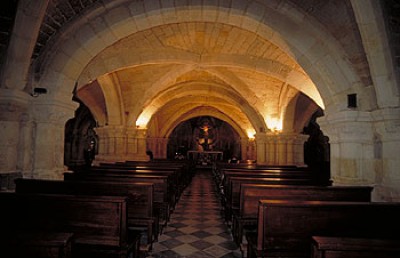
While Santander's main cathedral may not seem like much to look, the small lower 12th century church (Iglesia del Santísimo Cristo), has become one of my favorite churches.  I love how low the ceiling is, how it's lit by just dim lights, and how it sounds when there is a service and the music reverberates off the stone; I adore it.  It also is important to the history of Santander as this church houses the relics of Santander's patron saints, San Emeterio and San Celedonio, and a portion of the floor is comprised of glass panels showing excavated Roman remains.


Cuevas 

View from Monte Castillo
Cantabria is also a region famous for it's many caves and cave paintings; the most famous of these caves being Altamira.  It is located only about 20 minutes west of Santander and while it has been closed to the public since the early 2000s to protect the fragile cave paintings, there is a replica museum you can visit (that in my opinion as a history major, shows painstaking efforts to recreate it).  While Altamira is the most famous of the Cantabrian caves, there are still plenty of caves in Cantabria where you can actually go inside to see the cave paintings first hand.


In the village of Puente Viesgo are the caves of Monte Castillo.  This past summer, my boyfriend took me to visit two of the caves in this complex, Las Monedas and El Castillo.  Las Monedas was discovered in 1952 and is named for coins that were found within dating to the era of the Catholic Monarchs (Isabel and Ferdinand).  While it does have some cave paintings, it is more famous for its rock formations.  El Castillo is the main, and largest, cave of the Monte Castillo complex.  As you enter it, you are met by a dig site that shows all the levels of excavation of El Castillo over the years.  It has many cave paintings, the oldest dating back to the early stone age; long before the first paintings of Altamira.


El Soplao is another famous cave in the Cantabria region located near San Vicente de la Baquera.  This cave has no cave paintings, but is known for its amazing rock formations.  It was accidentally discovered in the early 20th century while drilling for mining and after years of mining use it was abandoned for decades.  To enter the cave you take a typical mine train that brings you inside like the original miners would have.  El Soplao is most well known for its helictites, stalactites that seem to defy gravity by turning upwards instead of growing down as well as its rock 'curtains'.  Soplao also has the basic tourist visit or you can take the 'adventure' tourist visit, where visitors are suited up and get to explore the different tunnels of the cave.


Pueblas 

Santillana del Mar
Another thing I love about Cantabria are all the tiny pueblas, or villages, spread throughout the countryside.  While pueblas are obviously not just a Cantabrian thing, I still list them because I find these small villages so quaint and unlike anything back at home.  One of my favorites is Santillana Del Mar.  It's a historic little town right near Altamira known as the 'Town of Three Lies,' because it's not a saint (santo), flat (llana), or near the sea (mar).  I love it's tiny cobble-stone streets and traditional Spanish homes.  It has a beautiful church and many small museums throughout the village.  I went in early June, and it was beautiful time to visit; not too crowded and not rainy.


San Vicente de la Baquera

Another puebla that I really liked was San Vicente de la Baquera.  This small village is right on the coast, near the border to Asturias and has always had a very important connection to the sea.  More recently it has had an increase in tourism due to its natural beauty, as seen in Oyambre Natural Park that covers a lot of the area around this puebla.  It is also very close to El Soplao, so together they make a nice day trip.  I personally think San Vicente is beautiful; I love the rugged green coastline of Cantabria.  The best time to visit is in the summer, as San Vicente is also known for its beaches.

Comillas
Comillas is another great coastal puebla to visit.  Originally Comillas was a fiefdom for the Marquis of Comillas, a post that is still officially in place.  While known for its coastline, beaches, and seafood (like much of Cantabria) Comillas is also home to the original building for the Universidad Pontificia de Comillas, now based in Madrid, and the Palacio Sobrellano, that was built for the first Marquis.  Both buildings are special, outside of the importance of their original purpose, because they are some of the few buildings designed by Catalan architects, outside of Catalonia.  Comillas is known for these Catalan designed buildings, and is also home to one of the few Gaudí buildings outside of Catalonia, the Capricho de Gaudí.


Picos de Europa

Literally just hanging out on the observation deck
Picos de Europa ("Peaks of Europe") is a range of mountains in Asturias, Castilla-Leon, and Cantabria.  To come up into the mountains we took the cable car from Fuente Dé, it brings you right to observation decks and the start of many hiking trails for different levels of hikers.  We didn't hike for very long, only an hour or two, but you could see that the trails were fit for hikers of all levels.

The mountains are beautiful and as a protected national park are home to various types of plant and animal life.  Walking around you could also see different groups of livestock grazing.  Traditionally, villagers would come up to live in the mountains during the warmer seasons to feed their livestock and to make the well-known cheese of the area.  A few still live like this today, bringing up livestock and making the famous Liébana cheese, but with the cable car and other technologies they do not need to live up there isolated for long periods.
One of the main paths from the Fuente Dé entrance

Cooling off in the river!
Potes is a small, adorable village located in the valleys near Picos de Europam in the region of Liébana.  Like most of the area of Cantabria, Potes has history dating back to the Romans, and this area is known for its cocido (stew), cheese, and orujo (a type of pomace brandy, though I prefer the crema de orujo). Potes is also the point where the two rivers of the region meet, which was a nice break for us to cool down because the day we visited it was over 100° F; we were dying!  

Nearby Potes is the Monastery of Santo Toribio de Liébana.  This monastery is famous because it claims to have in its possession one of the pieces of the True Cross, and the largest at that.  Because of this relic, it is one of five churches in the world where pilgrims can get the Jubilee.  I'm not Catholic but it was very interesting to visit the monastery and see such a renowned relic for myself.


Hotel del Oso, in Cosgaya near Potes


Ancient History 

Standing inside what once was a Roman house.
In the south of Cantabria (near Reinosa) lies the remains of Julióbriga, one of the most important cities during ancient Roman control of Cantabria.  It was founded around 29-19 B.C. and was named after the family name of Augustus (Julia, from his adopted uncle Julius Caesar), the reigning emperor.  It was abandoned in the 3rd century, and was not later identified as being Julióbriga until the 18th century.  Little remains of this city except for foundations of the structures that once dominated the city's hill.  Along with the museum, you can see the ruins for the poorer ('humble') houses, the wealthier houses, the city's temple, and the city's forum.    It's by far one of my favorite places I've visited in Cantabria; there's nothing to get a history major going like walking through some Roman ruins!
View of the forum's remains.


Closer to Santander, is the town of los Corrales de Buelna.  At the end of summer, they have a reenactment for the famous battles that took place in this area between the Romans and the Celtic tribe of the area, the Cantabris.  This reenactment is a weekend-long festival called La Fiesta de las Guerras Cántabras (Cantabrian War Celebration).  One of our friends partakes in it and I was lucky enough to get to visit before I had to return home last summer.  Almost 2,000 people participate and they are divided into the Romans and the Cantabris (our friend is on the Roman side, I think it's fitting since he really is half-Italian!)  They recreate both Roman and Cantabrian structures, dress in their sides outfits, and even have a reenactment battle!   I thought the outfits and structures were amazing, and all the people involved are so proud of taking part in this event that commemorates their heritage.  I've never been to anything like it, and hope I can visit again in the future to see the actual battle.

Replica ancient Cantabrian hut.


Iglesias Rupestres

Arroyuelos
In southern Cantabria, near Reinosa and Julióbriga, in the region of Valderredible are multiple Iglesias Rupestres (rock churches).  These churches date back to the early middle ages, and are literally churches that were carved out of the surrounding stone.  While most of these churches no longer hold services, you can still visit them.  We researched the path of where these churches were located and spent the afternoon driving from one to the other.  All together we visited three that day, and the most impressive was Arroyuelos.  Unlike the other Iglesias Rupestres that we visited that were closed, we were actually able to go inside Arroyuelos!

Inside Arroyuelos


When we visited, there was a little old man sitting outside his house on the steep road up to the church.  As we pulled over to ask which path of the road we should take he actually explained that he takes care of the key and would let us use it to go inside.   He only  asked that we give him whatever money we deemed acceptable (we only had 5€, but gladly gave it to him for this experience).  It was quite large inside, with very high ceilings.  The church even had a second floor that you could reach by some well-worn stairs off to the left side.  Never have I had the opportunity to personally hold in my hands the key to a church, let alone one as unique as a church carved into the surrounding rocks!  Visiting the Iglesias Rupestres was quite an adventure!  There were many more in the area that we did not see, and some that even were across the border in Burgos.  If you take a day trip to the south of Cantabria I definitely recommend visiting some of these unique rock churches.

One of the smaller churches: Caldalso


Summer Festivals

Like a lot of northern Spain, summer is the time for parties, and Cantabria is no exception.  While there are parties throughout Cantabria, most of my experience is with the ones that take place around Santander.  The first Sunday in June is Cantabrian Children's Day; celebrated on the peninsula of la Magdalena.  It celebrates the culture of Cantabria and there is traditional music, traditional dress, traditional food, and traditional goods.  I went my first summer and was blown away by how intricate these traditional outfits are, and how each style can tell you what region of Cantabria these people originally came from.  On the 23th of June they celebrate the festival for the eve of San Juan.  This festival is celebrated by lighting bonfires on the beach, traditionally for people to jump over (though now most choose to drink around the fires instead).

Around the middle of the July is Baños de Ola.  It celebrates the history of seaside recreation in Santander starting from the 1800s, and made even more popular when the royal family made Santander their summer home.  This festival includes movies, music, vendors, and activities from this time period and some of the people participating even dress in swimsuits and outfits from the 1800s!  The last two weeks of July are probably the biggest party of Santander though, it is their Semana Grande.  These two weeks are marked by casetas throughout the city (tiny buildings from different bars/restaurants serving delicious tapas and drinks), a fun fair, tents from different regions in Spain, fireworks, and bullfights.  Everyone goes out to celebrate and share their love for their city.  Another festival specific to Santander is the day of the Santos Mártires, the celebration of the two patron saints of Santander in August.  It celebrate the 'founding' of the city by these two saints. 


Also in August is the Medieval fair that takes places along the Paseo de Pereda and the Festival Intercultural near the soccer stadium.  In the Medieval Festival, vendors from throughout Spain are dressed in Medieval style clothes and selling their food and goods.  The Festival Intercultural celebrates the food, goods, music, and dance from different cultures around the world; we had crepes from France, beer from Germany, shark from South America, and kangaroo burgers from Australia.  Both festivals were quite something to see, and there was so much to look at and buy; I particularly liked the intercultural festival but I'm always partial to new food.   Not to mention the multiple music festivals that take place in the city throughout the summer, like Amstel.  With all these festivals and parties going on, it's hard not to love Cantabria in the summertime!


If you want to know more about my favorite region of Spain, visit the official tourism website of Cantabria.


Have you visited Cantabria before?  What was your favorite part?